TREND THREE:
ANTIMICROBIAL RESISTANTCE
© Artinun/Adobe Stock
A 2023 report published by the UN Environment Programme highlights a terrifying possibility – that, by 2050, antimicrobial resistance (AMR) could cause 10 million deaths each year. Put another way, the study suggests that the growing resistance of pathogens to today’s treatments could, by mid-century, cause the same number of deaths as cancer caused in 2020. Already, the Center for Global Development estimates the direct cost of AMR to be $66 billion per year.
Fortunately, innovators are fighting back. In addition to developing new and effective antibiotics, efforts are also being made to better monitor AMR and reduce its environmental causes. And, as with so many sectors, AI is playing a role by helping researchers to explore previously overlooked development angles.
INNOVATION ONE:
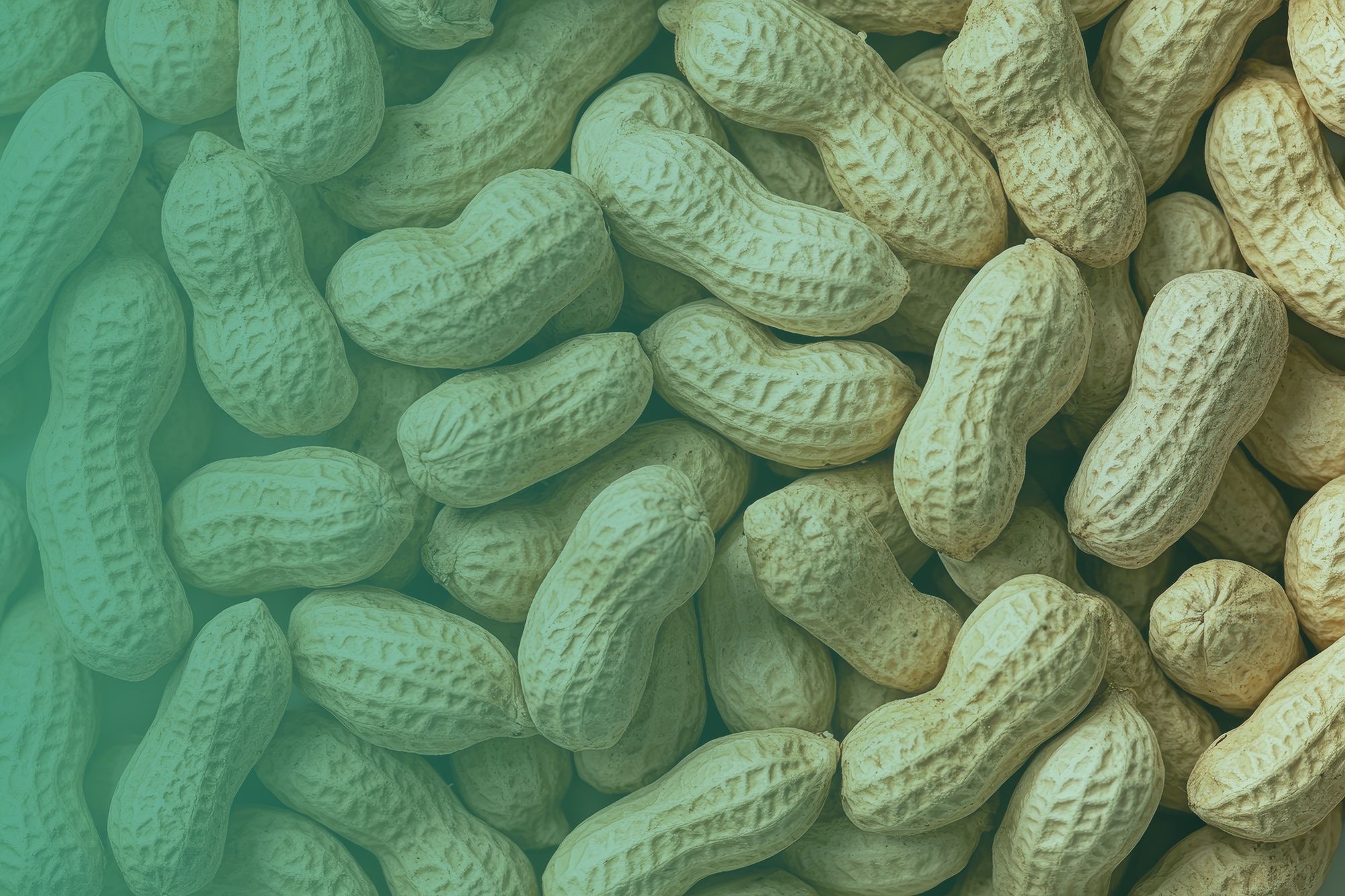
Peanut shells help combat superbugs
Antibiotic resistance is one of the world’s biggest public health threats and fish farming is a surprising major contributor. To prevent disease outbreaks, aquaculture operations often rely heavily on antibiotics. But when wastewater from these farms enters rivers or seas untreated, it carries antibiotic-resistant bacteria (ARB) into wider ecosystems.
Traditional treatment methods like chlorination or ultraviolet (UV) light often fall short, leaving behind harmful microbes and sometimes creating toxic by-products. Now, a research team in China may have a solution: a sustainable and surprisingly low-cost material made from peanut shells.
The breakthrough uses biochar made from peanut shells, an agricultural waste product, combined with a bismuth ferrite (BiFeO3) catalyst. When activated with peroxymonosulfate, this biochar-doped material rapidly wipes out resistant bacteria.
The system generates powerful oxidants that break down bacterial membranes and overwhelm their defences. In tests, this approach eliminated almost two orders of magnitude of ARB in aquaculture wastewater in just 10 minutes.

The system generates powerful oxidants that break down bacterial membranes and overwhelm their defences.”
© abdulhamid/Adobe Stock
The peanut shell biochar not only improves the catalyst’s performance by creating extra reactive sites, but also repurposes a common farming by-product that would otherwise go to waste.
The project was inspired by the urgent need to slow the spread of antimicrobial resistance, which threatens both ecosystems and human health. By designing a treatment that’s affordable, durable, and has low toxicity, the team hopes to give aquaculture a cleaner path forward. While the peanut shell biochar-catalyst composite’s durability in broader wastewater treatment scenarios still needs to be explored, this technology shows the potential of offering aquaculture a low-cost, sustainable tool to limit antibiotic resistance while reusing agricultural by-products.
TAKEAWAYS:
- Wastewater from aquaculture farms often carries antibiotic-resistant bacteria (ARB) into wider ecosystems
- Now, Chinese researchers have developed a peanut-based biochar material that destroys ARB in water very effectively
- In tests, the material eliminated almost two orders of magnitude of ARB in aquaculture wastewater in just 10 minutes.
INNOVATION TWO:
Could plane toilets help stop the spread of superbugs?
One of the biggest drivers of AMR’s spread is international travel, which allows drug-resistant microbes to move across borders faster than ever before.
To address this, researchers from Australia’s Commonwealth Scientific and Industrial Research Organisation (CSIRO), in partnership with universities in Australia, China, and the US, are testing an unlikely early-warning system: aircraft toilets.
In a study of wastewater from 44 international flights into Australia, the team found nine high-priority pathogens and multiple antibiotic resistance genes (ARGs). Worryingly, some of these included genes resistant to last-resort antibiotics that were absent in Australia’s own urban wastewater at the time, which suggests they had likely arrived via international passengers.
What makes this approach unique is its simplicity. Instead of relying on costly individual screening or post-arrival testing, aircraft wastewater acts as a pooled sample of hundreds of passengers, capturing genetic traces of superbugs from across multiple continents in a single flush. The study also confirmed that disinfectants used in aircraft toilets don’t degrade genetic material for at least 24 hours, making the samples both stable and reliable for surveillance.
Instead of relying on costly individual screening or post-arrival testing, aircraft wastewater acts as a pooled sample of hundreds of passengers, capturing genetic traces of superbugs from across multiple continents in a single flush."

© razzel/Adobe Stock
The work is inspired by the urgent need for global monitoring tools that are fast, affordable, and scalable. Previous CSIRO projects showed that aircraft wastewater could detect coronavirus, helping health agencies during the COVID-19 pandemic. Now, the team believes the same system could be repurposed to track AMR and other infectious diseases.
This method could be adapted for routine international flights, turning aircraft toilets into a low-cost global surveillance network and providing early warnings before dangerous resistance genes become established in local environments. Ultimately, it could become a small but powerful tool in tackling one of the world’s most pressing health threats.
INNOVATION DATA:
Country: Australia, China, US
Development stage: Research
Contact: csiro.au/en/contact
TAKEAWAYS:
- One of the biggest drivers of the spread of antimicrobial resistance is international travel, which allows drug-resistant microbes to rapidly move across borders
- A team of international researchers is addressing this issue by using aircraft toilets as an early-warning system
- Instead of relying on costly individual screening or post-arrival testing, aircraft wastewater acts as a pooled sample of hundreds of passengers
© Phoebe/Adobe Stock
INNOVATION THREE:
AI looks for antibiotics in ancient microbes
AMR occurs because the more an antibiotic is used, the faster bacteria develop resistance to it. Current efforts to research and develop new treatments are also inadequate, meaning the world is fast running out of effective antibiotics.
Researchers at the University of Pennsylvania are hoping to combat this by tapping into a new source for antibiotics – microbes called Archaea. These ancient, single‐celled organisms have been largely overlooked as a source of new antibiotics. Archaea are distinct from eukaryotes (which include plants, animals, and fungi) and have unique genetics, cell structures, and biochemistry, which allow them to thrive in extreme environments that would kill other organisms.
While most antimicrobial proteins work by attacking the bacterium’s outer defences, the archaeasin proteins seem to work by depolarising the cell membrane of the bacteria, scrambling the electrical signals that keep the cell alive.”
The team used a deep learning model called APEX to scan 233 archaeal proteomes (the complete set of proteins expressed by an organism). The model identified more than 12,000 candidate peptides, short chains of amino acids, dubbed ‘archaeasins’. The researchers then synthesised 80 of these and found that 93 per cent of them showed antimicrobial activity in the lab. In animal models, one peptide (archaeasin-73) even performed about as well as polymyxin B, which is currently used as a last-resort antibiotic. This proved that Archaea can harbour therapeutically relevant molecules.
While most antimicrobial proteins work by attacking the bacterium’s outer defences, lead researcher Presidential Associate Professor César de la Fuente told Springwise that the archaeasin proteins seem to work by depolarising the cell membrane of the bacteria, scrambling the electrical signals that keep the cell alive.
The researchers plan to improve APEX’s accuracy by training it to predict antibiotic candidates based on their structure, and, one day, they hope to conduct human trials using antibiotics developed from these ancient proteins. “The broader vision is simple,” César de la Fuente explained. “Understand biology, then use that understanding to solve some of the world’s hardest problems. We have shown this is possible in antibiotics and microbiology. For example, our AI models (like APEX) have accelerated antibiotic discovery so that, in a few hours, we can identify hundreds of thousands of candidate molecules – work that used to take years with conventional approaches.”
The team’s research was published recently in the journal Nature Microbiology. The work was supported by the Langer Prize, the National Institute of General Medical Sciences of the National Institutes of Health, and the Defense Threat Reduction Agency.
TAKEAWAYS:
- Researchers are hoping to combat antimicrobial resistance through archaea – single‐celled organisms that have been largely overlooked as a source of new antibiotics
- The team used a deep learning model called APEX to scan archaeal proteomes to discover peptides with antimicrobial properties
- Using this technique, the researchers were able to synthesise 80 ‘archaesins’, 93 per cent of which were found to demonstrate antimicrobial activity in the lab