TREND TWO:
FOOD-PRESERVING SOLUTIONS
Food waste alone accounts for nearly five times the emissions of the entire aviation sector, and according to the UN Environment Programme, 17 per cent of all food available at the consumer level is wasted.
Plastic packaging plays a key role in extending shelf lives, but packaging is also the source of 40 per cent of global plastic waste. In response, innovators are coming up with new ways to extend shelf lives and prevent consumer food waste – without adding further to plastic pollution.
INNOVATION ONE:
Bio-active packaging cuts food waste
A fifth of all food produced for human consumption gets lost or wasted, and in developed countries household waste is a significant issue. In the UK, for example, 60 per cent of food waste occurs at the household level. That means a huge volume of resources, money, and energy spent producing food ends up in the bin – causing tonnes of unnecessary emissions in the process. Often, food is thrown away post-harvest due to spoilage, but startup Freshr believes its solution could help.
To prevent food from going bad too quickly, the company has developed a proprietary coating called FreshrPack. Made from naturally derived ingredients that inhibit bacterial action, FreshrPack extends the shelf life of fresh foods by 15 to 30 per cent (for salmon, that’s two to four days). It can be applied to various packaging films, including compostable, recycled, and recyclable materials, and is available in sheet, roll, and premade bag formats.
FreshrPack has been designed especially for use with proteins, namely seafood. The company claims that, in addition to extending shelf life, the coating can reduce water loss and bacterial and chemical spoilage, without changing a product’s taste or requiring additional food additives. Both the FreshrPack bag and the company’s FDA-compliant roll are 100 per cent biodegradable in an industrial composting facility.

FreshrPack has been designed especially for use with proteins, namely seafood.”
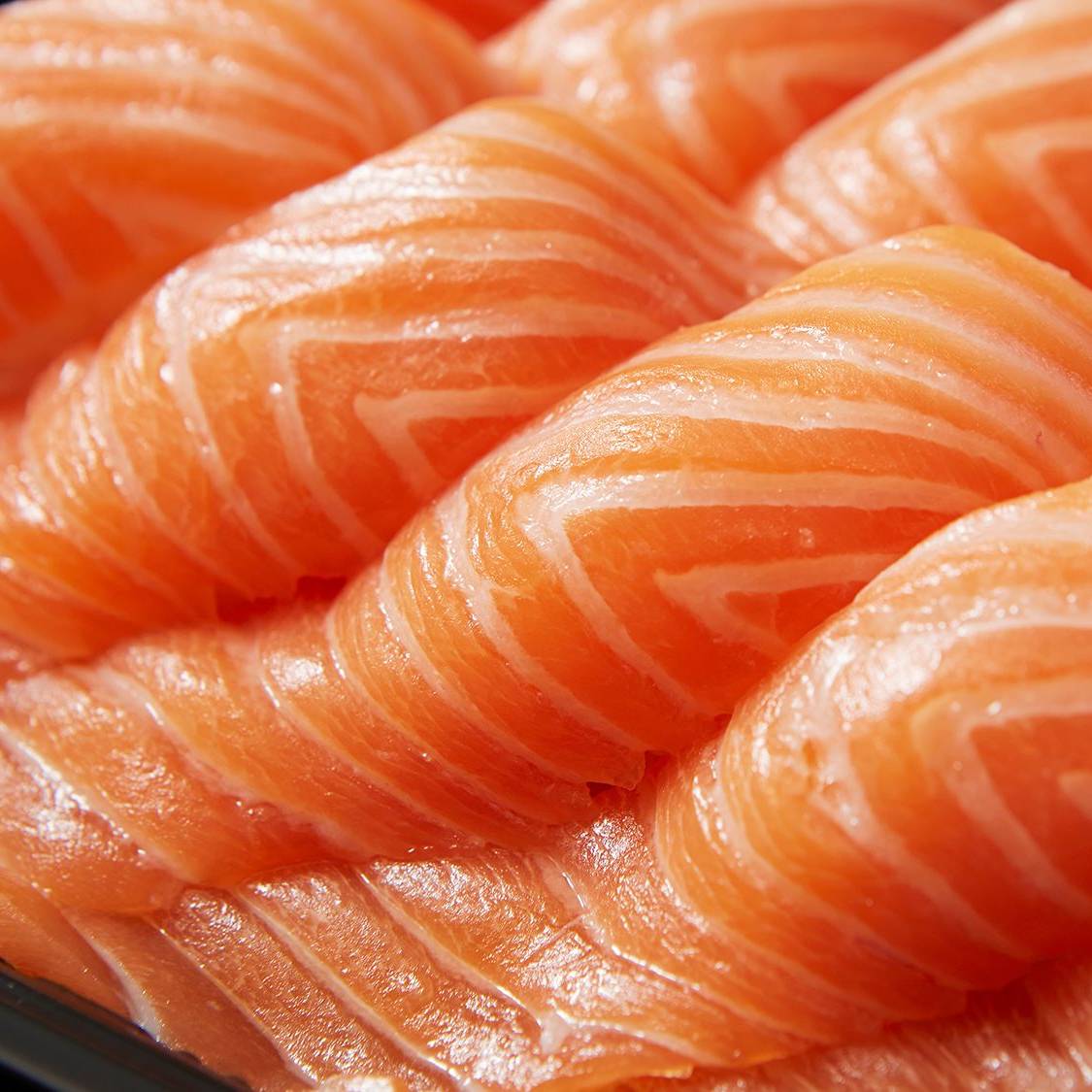
By giving food a longer shelf life, Freshr could help reduce the amount of organic waste created. In turn, this could reduce methane emissions, as well as help companies and individuals lower food costs – without the need for more petroleum-based plastic packaging. A representative for the company told Springwise that Freshr is focused on innovating “a zero-food-waste future using advanced materials.”
The company recently completed an oversubscribed seed funding round, which will be used to accelerate production to meet growing demand and enable commercial expansion over the next 12 to 18 months, with a focus on high-waste protein categories like seafood. The company is also engaging in pilot programmes in North America, Europe, and Southeast Asia, with a goal of delivering 500 million pounds of fresh proteins wrapped in FreshrPack technology by 2030.
INNOVATION DATA:
Country: Canada
Development stage: Scaling
Funding stage: Seed
Contact: office@freshr.tech
TAKEAWAYS:
- Freshr has developed a proprietary coating that inhibits bacterial action
- Applied to various packaging films, the coating extends the shelf life of fresh foods by 15 to 30 per cent
- The solution could lower the amount of organic food waste without the need for extra petroleum-based plastic packaging
INNOVATION TWO:
A breakthrough biofilm keeps fruit fresh
Post-harvest food waste is a global issue, and strawberries, with their soft texture and high water content, are among the most vulnerable. But now, researchers in Brazil may have found a low-cost and natural way to extend the shelf life of these highly perishable fruits using ingredients that would otherwise go to waste.
Developed at the University of São Paulo (USP) and supported by the São Paulo Research Foundation, a new edible biofilm made from pomegranate peel, squid shells, and gelatin has shown promising results in early trials. The coating, which is applied through a simple dipping process, helps strawberries resist dehydration and fungal contamination for nearly twice as long under refrigeration.
“Our work is inspired by the expressive post-harvest losses that occur in markets and retailers,” Mirella Bertolo, the study’s lead researcher and now a postdoctoral fellow at EMBRAPA Instrumentation, told Springwise. “Strawberries are the third most produced fruit in Brazil, but they are also one of the fruits most lost in the post-harvest period.”
In testing, strawberries coated with the biofilm showed just 11 per cent weight loss after 12 days of refrigeration, compared to four days before contamination set in for uncoated fruit. The coated strawberries also retained their aroma and firmness, with sensory panels reporting no noticeable difference in taste or appearance.
In testing, strawberries coated with the biofilm showed just 11 per cent weight loss after 12 days of refrigeration, compared to four days before contamination set in for uncoated fruit.”
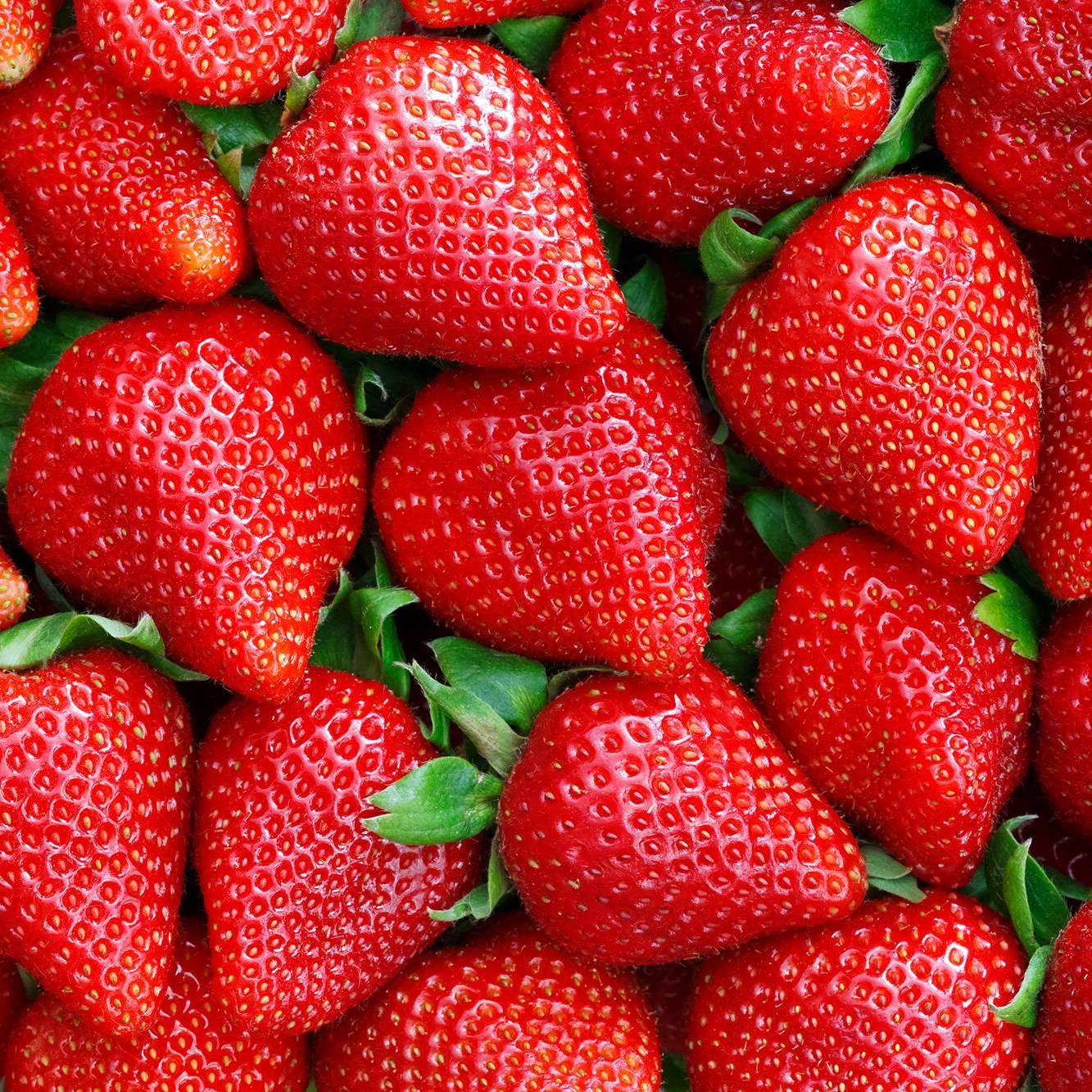
The team’s innovation lies in the unusual combination of ingredients used to make the coating. The pomegranate peels, a rich source of natural antioxidants and antimicrobials, are paired with gelatine and chitosan – a natural polymer derived from squid glia, chosen over traditional shrimp-based sources to avoid allergen risks. Together, the materials form a transparent, edible layer that slows fruit respiration and blocks microbial invasion.
“We are trying to solve the problem of food waste, especially regarding post-harvest losses of fruits, by creating edible films based on natural compounds,” Bertolo explained. “Moreover, the films are prepared from agro-industrial waste and fishing industry waste, allowing the reuse of these compounds in a value-added application.”
With a projected price of just R$0.15 (only around €0.02) per fruit, the biofilm could represent a cost-effective solution for producers, retailers, and consumers alike. And while strawberries were used as a model, the team believes the coating may work just as well on other fruits, with plans already underway to expand testing beyond the lab and into larger-scale trials.
TAKEAWAYS:
- University of São Paulo researchers have developed a new edible biofilm for fresh fruit made from pomegranate peel, squid shells, and gelatin
- In testing, strawberries coated with the biofilm showed just 11 per cent weight loss after 12 days of refrigeration
- With a projected price of around €0.02 per fruit, the biofilm could represent a cost-effective solution for producers, retailers, and consumers alike
INNOVATION THREE:
A smarter alternative to the ‘best before’ date
Every year, millions of tonnes of perfectly edible food are wasted due to inaccurate or overly cautious ‘best before’ and ‘use by’ dates.
To tackle this, a Norwegian company has developed Keep-it, a real-time shelf-life indicator that provides a dynamic alternative to static expiration dates. Instead of relying on a fixed ‘best before’ stamp, Keep-it continuously monitors temperature exposure to show the true remaining shelf life of perishable foods. This information is displayed on a thermometer-like indicator whose bar moves left or right, in line with how many days are left on an item.
Unlike traditional labels, Keep-it moves faster when food is exposed to higher temperatures and slows down when kept cold. For example, if a pack of fish is stored above its ideal temperature of four degrees Celsius, the indicator will accelerate, reflecting the product’s shortened lifespan. Conversely, if stored colder, the indicator slows, extending its estimated freshness. Once it reaches zero, the product is no longer safe to eat.
This real-time monitoring could be a game-changer for both retailers and consumers. By offering a more accurate measure of freshness, it has the potential to reduce unnecessary waste while ensuring food safety. Early trials in Norway’s REMA 1000 supermarkets saw food waste drop by up to 60 per cent – a significant improvement in both environmental and economic terms.
“Millions of tons of perfectly good food are thrown away each year because consumers and retailers lack precise, real-time information about a product’s actual shelf life,” Kristen A. Hovland, CEO of Keep-it Technologies, told Springwise. “This inspired us to develop a scientifically validated, real-time shelf life indicator that gives consumers, retailers, and producers accurate and dynamic information – helping them reduce waste, save money, and improve food safety.”
The technology is already gaining traction, with plans to expand across major European retailers. Beyond fresh foods like meat and fish, Keep-it envisions applications in dairy, ready-to-eat meals, and even pharmaceuticals, where temperature control is critical. Looking ahead, the company is developing a next-generation indicator that will be directly integrated into packaging, making it even easier to use at scale.
With global food waste in urgent need of reduction, innovations like Keep-it offer a practical, scalable way to cut waste, improve food safety, and move toward a more sustainable supply chain.
The technology is already gaining traction, with plans to expand across major European retailers.”
TAKEAWAYS:
- Keep-it is a real-time shelf-life indicator that provides a dynamic alternative to static expiration dates
- The indicator continuously monitors temperature exposure to show the true remaining shelf life of perishable foods
- Early trials of the technology in Norway’s REMA 1000 supermarkets saw food waste drop by up to 60 per cent