TREND ONE:
PLASTIC ALTERNATIVES
Although plastic has well-known environmental downsides it is also extremely versatile and convenient. As a result, despite the now widely acknowledged need for alternatives, global plastic production has grown steadily in recent years.
Impetus for global change could come from the upcoming round of negotiations on a global Plastics Treaty – if they prove to be more successful than previous talks. In the meantime, innovators around the world are already developing alternatives that incorporate circular principles using feedstocks from woody waste to potato peels. To achieve success, the most promising solutions are improving their scalability by tapping into readily available waste streams and slotting into existing manufacturing processes.
INNOVATION ONE:
Recycling forest waste into futuristic plastic
Swedish startup Lignin Industries is addressing the problem of plastic waste by transforming an abundant waste material – lignin – into a scalable, drop-in alternative to traditional plastics.
Lignin is a complex natural polymer found in the cell walls of all plants, and is often discarded or incinerated as low-value waste in forestry and agriculture. Lignin Industries has developed a patented process that upcycles this by-product into Renol, a versatile bio-based thermoplastic. Designed to integrate seamlessly into existing plastic manufacturing lines, Renol can be blended with widely used plastics like acrylonitrile butadiene styrene (ABS), polyethylene (PE), and polypropylene (PP) to produce moulds, films, and packaging.
Unlike many bio-based plastics that rely on food crops such as corn or sugarcane, Renol sidesteps land-use conflicts and food chain impacts. Founder and CTO Dr Christopher Carrick explained to Springwise: “Our solution, Renol, is developed from lignin, a natural polymer found in the cell walls of all plants. Over 700 million tons of lignin is incinerated, discarded, or used for low-value energy applications globally each year.”

Unlike many bio-based plastics that rely on food crops such as corn or sugarcane, Renol sidesteps land-use conflicts and food chain impacts.”

Renol not only reduces CO2 emissions compared to conventional plastics, but also supports circularity, including through products like e-commerce bags that are recyclable within existing low-density polyethylene (LDPE) streams.
Having spent five years in R&D before emerging from stealth in 2024, Lignin Industries is now scaling up fast. The company has just closed a €3.9 million funding round, led by its founding Carrick family and supported by over two dozen investors. It has also partnered with UK-based compounder Hellyar Plastics, unlocking routes into sectors from consumer electronics to construction. Recent collaborations with Scania and Vinnova show early traction in automotive applications.
As Dr Carrick put it: “By scaling bio-based plastics made from naturally abundant forestry and agricultural residues, we are presenting a sustainable, scalable, and functional alternative to traditional fossil-based plastics.” The race is now on to get Renol into more hands – and into more products – at industrial scale.
INNOVATION DATA:
Country: Sweden
Development stage: Development
Funding stage: Seed
Contact: contact@lignin.se
TAKEAWAYS:
- Lignin Industries upcycles low-value forestry and farming waste into Renol, a versatile bio-based thermoplastic
- Designed to integrate seamlessly into existing plastic manufacturing lines, Renol can also be blended with widely used plastics
- Renol not only reduces CO2 emissions compared to conventional plastics, but also supports circularity
INNOVATION TWO:
Rethinking food and packaging with potato peels
In order to keep fruits and vegetables fresh in transit, they are often packaged in petroleum-based plastics and non-recyclable paper packaging. This food packaging continues to be a significant – and growing – waste source across the globe. Startup PeelPack is set to change this with its pioneering new type of packaging.
The company’s biopolymer containers are made from waste potato peels and are both biodegradable and compostable. To make it suitable for use with food, the material is also chemically and mechanically stable, possessing both antioxidant properties and UV protection.
PeelPack can be used to replace conventional petroleum-based plastics and non-recyclable paper packaging commonly used in fresh fruit and vegetable packaging.”
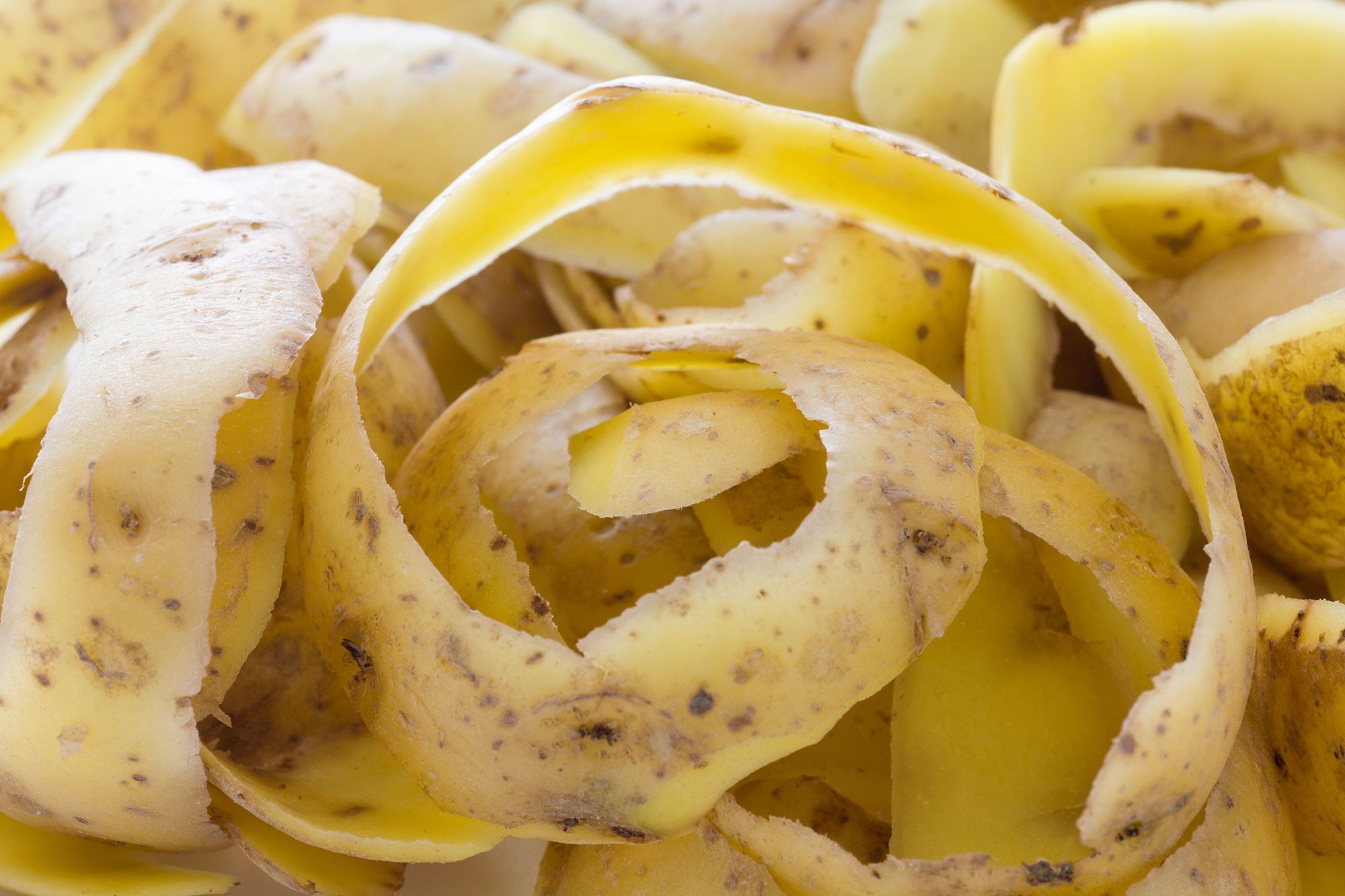
PeelPack can be used to replace conventional petroleum-based plastics and non-recyclable paper packaging commonly used in fresh fruit and vegetable packaging, offering performance that is comparable to plastic, including cold chain and humidity resistance. Plus, the company highlights that its products integrate seamlessly into existing packaging processes, making adoption easy.
By substituting plastic packaging with PeelPack’s biopolymer punnets, the company projects that its packaging solution could lead to a significant reduction in greenhouse gas emissions, waste generation, and reliance on fossil fuels.
Recently, PeelPack is the recipient of ₣10,000 (around €10,649) in Venture Kick funds. The company plans to use the funding to produce 100,000 units for a large-scale pilot project with leading Swiss Food retailers and to secure intellectual property rights for the technology.
TAKEAWAYS:
- PeelPack has developed biopolymer containers made from waste potato peels
- These containers are food safe and integrate seamlessly into existing packaging processes
- The novel solution replaces conventional petroleum-based plastics and non-recyclable paper packaging commonly used in fresh fruit and vegetable
INNOVATION THREE:
Plastic-free super-materials made from pulp
Finnish startup Fiberdom has developed a new kind of material made from wood fibres that’s designed to serve as a direct replacement for single-use plastic, without the typical trade-offs.
The innovation is a patented, plastic-free material formed from FSC-certified pulp and paperboard. Unlike many other fibre-based alternatives, it contains no synthetic coatings or fossil-derived binders. Instead, Fiberdom has developed a method for treating wood fibres with natural ingredients to give the material both formability and strength – qualities often reserved for plastic. The result is a mono-material that can be recycled in existing carton streams or composted at home, thanks to a TÜV Austria HOME certification.
Fiberdom has developed a method for treating wood fibres with natural ingredients to give the material both formability and strength.”
This simplicity is a key differentiator. As Tomi Järvenpää, general manager of the company, explained to Springwise: “Fiberdom’s uniqueness lies in its process. We’ve developed a patented method of functionalising wood fibres using only natural ingredients – no fossil polymers, no synthetic coatings, and no additives that hinder circularity.” The technology delivers four crucial traits – scalability, durability, sustainability, and recyclability – within a single, clean material structure. Its commercial debut came through a successful line of plastic-free cutlery, proving that functionality and eco-credentials can co-exist.
Having just raised €3.5 million in funding, led by Heino Group with backing from Nordic Foodtech VC, Holdix Oy, and a €0.6 million grant from Business Finland, the company is looking to expand its applications beyond foodware. Partnerships are already forming to explore uses in packaging, storage, and interior product design. “We want to enable converters, manufacturers, and brands to move to truly scalable, cost-competitive, circular, and plastic-free materials that don’t require trade-offs,” said Järvenpää.
As the global fibre-based packaging market heads towards a projected $567 billion by 2034, Fiberdom’s innovation offers a glimpse into a future where high-performance materials can support sustainable choices at scale, without reverting to plastic.
TAKEAWAYS:
- Fiberdom has created a plastic-free packaging material formed from FSC-certified pulp and paperboard
- Unlike many other fibre-based alternatives, it contains no synthetic coatings or fossil-derived binders
- The solution delivers scalability, durability, sustainability, and recyclability within a single, clean material structure